
Modernizing a military force is a game of economics. For Indonesia, this challenge is unique. We have a massive territory to defend, a growing strategic mandate, but a finite budget. Every Rupiah spent on training is a Rupiah that cannot be spent on acquiring new hardware (Alutsista).
The traditional equation has always been: High Readiness = High Cost. To train elite soldiers, you need to burn fuel, fire thousands of live rounds, and deploy massive logistics.
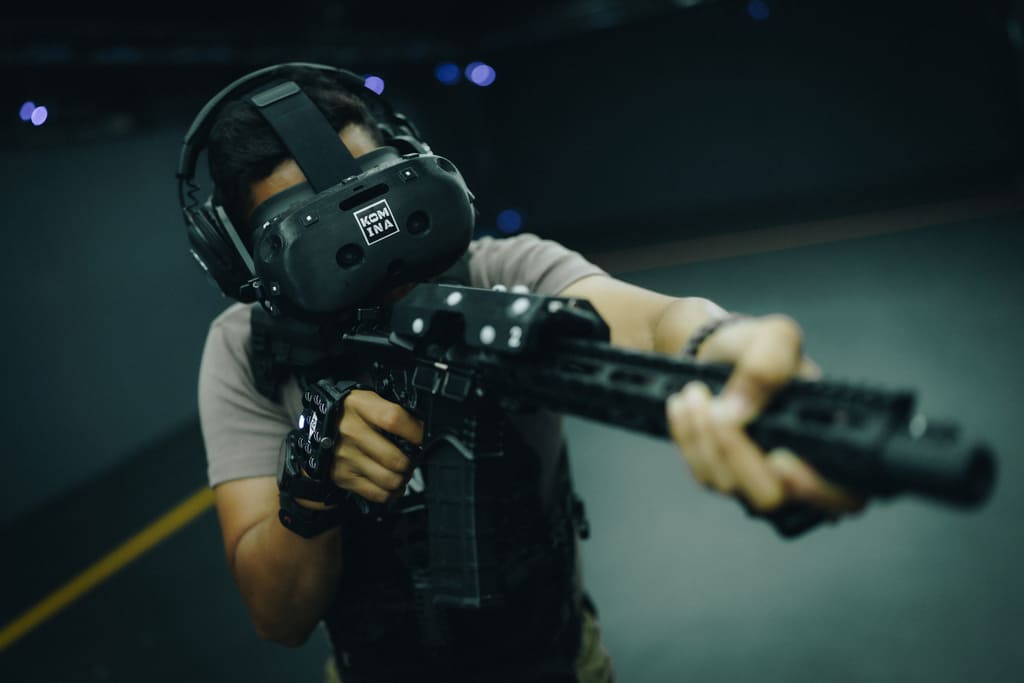
Komina changes this equation. By integrating Virtual Reality (VR) into the defense curriculum, we allow the Indonesian National Armed Forces (TNI) to decouple “Capability” from “Cost.”
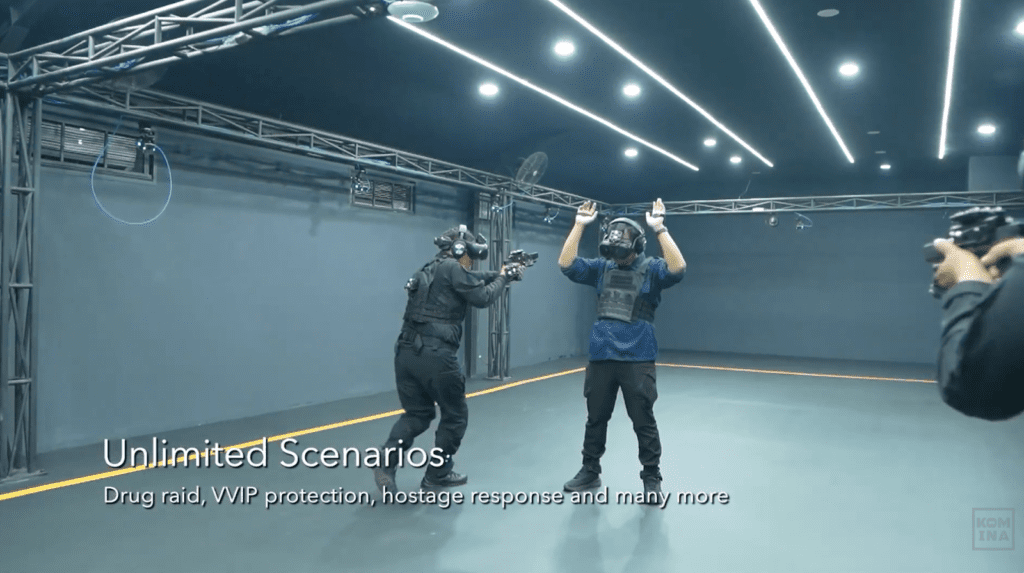
Here are five specific ways our VR ecosystem acts as a force multiplier for the national defense budget.
1. The “Zero-Cost” Ballistics Doctrine
Let’s look at the math of marksmanship. To create a proficient marksman, a soldier needs to fire thousands of rounds to build muscle memory. In the real world, 5.56mm and 7.62mm ammunition costs money to produce and procure. When multiplied by hundreds of thousands of personnel, the “ammo burn” for basic training consumes a massive slice of the annual operations budget.
The Komina Fix: In our VR ecosystem, a bullet costs Rp 0.
Soldiers can fire 10,000 virtual rounds to perfect their sight alignment, breathing control, and trigger squeeze without depleting the national stockpile. Live ammunition is then saved for the final qualification phases, ensuring that every real bullet fired is fired by a soldier who already knows how to hit the target.
2. Conquering the Archipelago’s Logistic Costs
Indonesia is an archipelagic nation. This creates a strategic challenge known as the “Tyranny of Distance.” Moving a battalion from a base in Sumatra to a specialized training center in Java involves C-130 Hercules flights, convoys, fuel, and per diems. The logistics of training are often more expensive than the training itself.
The Komina Fix: VR enables Decentralized Training.
Instead of moving 500 soldiers to a simulation center, Komina can deploy portable VR units to the remote base. The “Kill House” comes to the soldiers. This eliminates travel costs and downtime, allowing units in border regions to receive the exact same quality of tactical training as units in the capital, without leaving their post.
3. Preserving the Lifespan of Heavy Assets (Alutsista)
Every hour a Leopard 2RI tank or an Anoa APC runs for training, it consumes engine hours. Tracks wear down, suspension is stressed, and expensive diesel is burned. Using prime assets for basic driver training is economically inefficient. It accelerates depreciation and leads to ballooning maintenance budgets.
The Komina Fix: Komina’s vehicle simulators allow operators to master the cockpit, startup procedures, and tactical maneuvering without starting a real engine.
We shift the “wear and tear” from a multi-billion Rupiah asset to a digital server. The real tanks are kept in pristine condition, ready for actual deployment operations.
4. The Infinite Scenario Sandbox
In traditional training, creating a new scenario costs money. You have to build physical structures, hire role-players (civilians/hostiles), and reset the “stage” after every drill. If you want to simulate a chemical attack, the safety and cleanup costs are astronomical.
The Komina Fix: In VR, changing the scenario from an urban hostage rescue to a jungle ambush costs nothing. Instructors can generate complex, high-risk scenarios—including chemical warfare or artillery strikes—with a single click. The “Production Cost” of the exercise drops to near zero, allowing for higher frequency and variety in training iterations.
5. Mitigating the Cost of Accidents
Training accidents are tragic, but they are also financially devastating. A vehicle rollover, a negligent discharge, or a pyrotechnic mishap can result in the loss of personnel, medical costs, and the write-off of expensive equipment.
The Komina Fix: VR provides a “Fail-Safe” Environment. Operators can make fatal mistakes—like driving a tank off a bridge or mishandling explosives—and learn from them without physical consequence. We allow soldiers to experience the danger and learn the lesson without the defense budget absorbing the cost of a disaster.
Conclusion: Fiscal Lethality
Adopting Komina’s VR technology is not just a tactical decision; it is a fiscal responsibility. It allows the Indonesian military to do more with less—extending the value of every Rupiah allocated to defense.
We ensure that when the military budget is spent, it is spent on strength, not waste.
Contact Us
Maximize Your Training ROI
Let’s discuss how Komina can reduce your unit’s operational expenditure (OpEx) while increasing combat readiness.
Email: [email protected]
Phone/WhatsApp: +62 812 9696 7887
Address: Pondok Indah Office Tower 2, Lt. 15 Jakarta Selatan, DKI Jakarta 12310
Website: www.komina.co