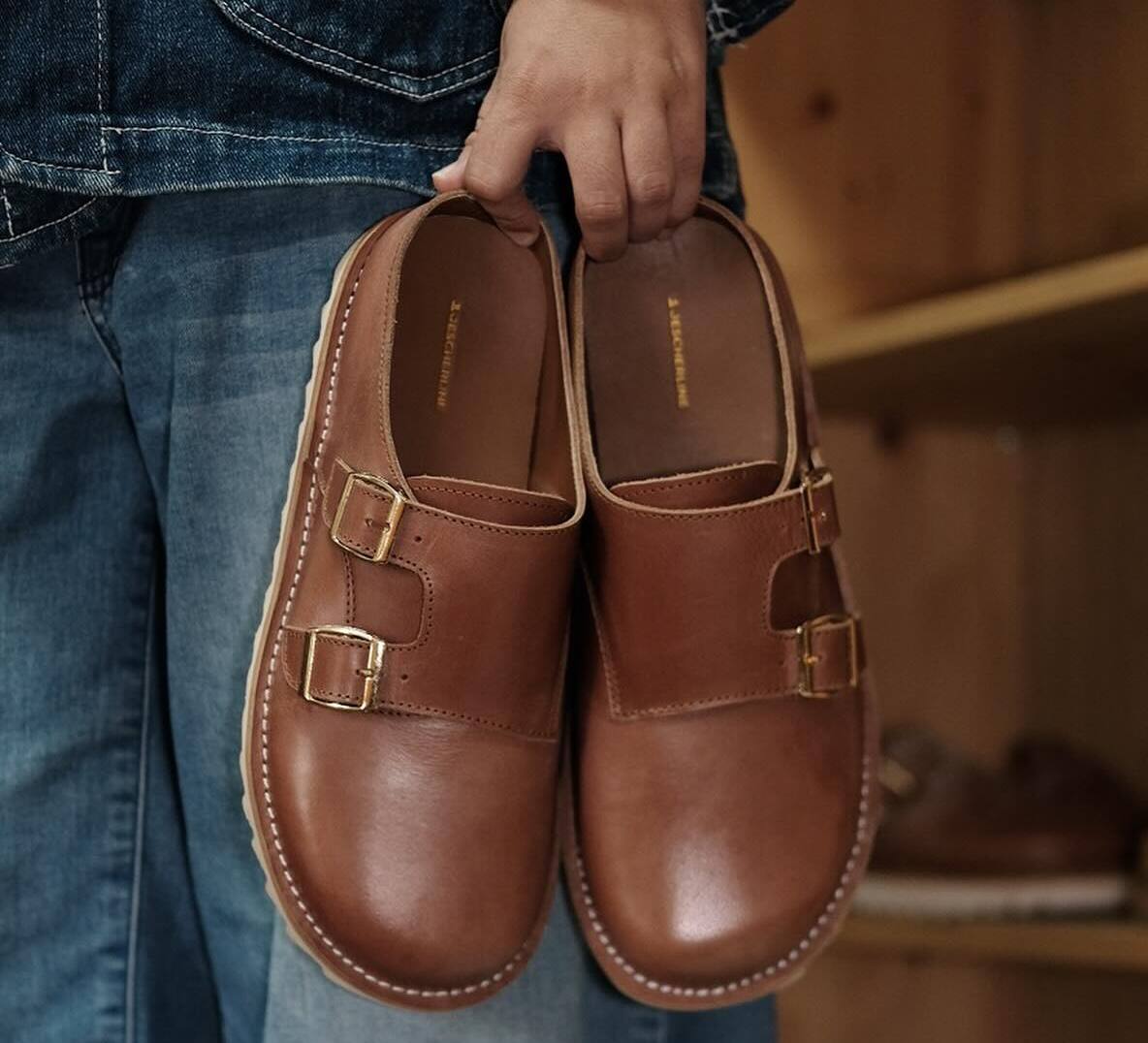
Most people buy sandals on looks and price, and never think about how they are held together. That is understandable, since the construction is usually invisible until the day the sole peels away from the upper and the pair is suddenly garbage. For cheap sandals, that day tends to come fast. The glue lets go, often at the worst possible moment, and there is nothing to be done about it.
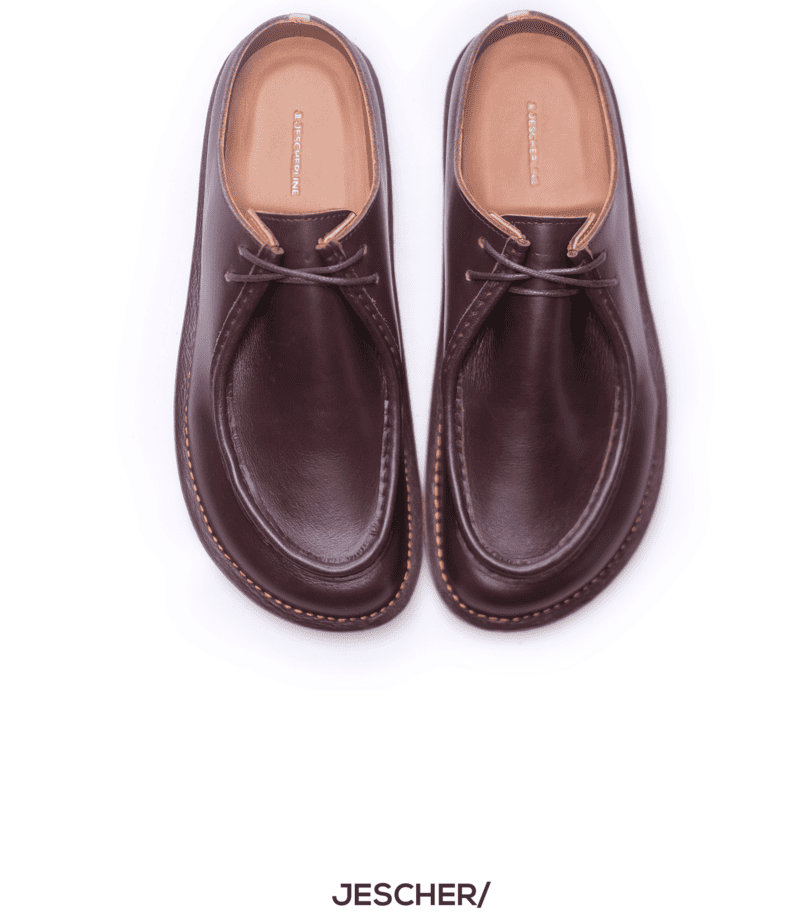
Jescherline builds its leather sandals and mules using stitch-down construction, and it is one of the less visible reasons the pairs hold up the way they do. It is not a flashy feature. You will not see it in a photo. But it shapes how the shoe wears, flexes, and lasts. Here is what it is and why it is worth caring about.
1. What Stitch-Down Construction Actually Is
The name is fairly literal. In stitch-down construction, the upper, the part of the shoe that wraps your foot, is flared outward at the bottom and stitched directly down onto the midsole. The leather is physically sewn to the base rather than only glued to it.
That single difference changes the character of the shoe. The seam runs around the edge of the sole, where you can often see it if you look. Because thread is doing the structural work, the bond does not depend entirely on adhesive holding for years in heat, sweat, and wet. Stitch-down is a long-established method precisely because it produces a sturdy, hard-wearing shoe, which is why serious sandal and boot makers keep using it instead of taking the cheaper, quicker route.
2. Why Glued Sandals Fall Apart
To see the value, look at the alternative. The vast majority of inexpensive sandals are cemented, meaning the sole is glued to the upper and nothing else. When that bond is fresh, it feels fine. The problem is everything that happens afterward.
Heat softens glue. Moisture works into it. Repeated flexing stresses it. Over months, the adhesive gives up, and the sole starts separating from the upper, usually at the toe or heel first. Once that begins, it spreads, and a glued sandal is generally not worth repairing. You throw it out and buy another. Stitch-down construction sidesteps the whole cycle, because even as glue ages, the stitching keeps the shoe together. It is the difference between a pair that survives a few seasons and one that you actually keep.
3. The Vegetable-Tanned Midsole Underneath
Stitch-down construction also relies on having something solid to stitch into, and this is where Jescherline’s choice of midsole comes in. The brand uses a vegetable-tanned leather midsole, sitting between the footbed and the outsole, and it does more than fill space.
Vegetable tanning is the traditional, slower way of treating leather, and it produces a firm, durable material that holds a stitch well and stands up to compression over time. As a midsole, it gives the sandal a stable spine, so the shoe keeps its shape rather than going soft and shapeless. It also molds gradually to the pressure of your foot, which feeds into the comfort side of things. A good outsole stitched to a good midsole is a far more durable arrangement than a slab of foam glued to rubber, and you feel the difference over the life of the shoe.
4. It Flexes With Your Foot, Not Against It
A subtler benefit of stitch-down is how the shoe moves. Because the upper is stitched down at the edges and built on a leather midsole, the sandal flexes along natural lines as you walk rather than resisting in stiff, awkward places.
This matters for a backless shoe in particular, where your foot is doing more of the work to keep the shoe with you. A sandal that bends where your foot bends feels like an extension of your stride. One that fights you feels like a chore by the end of the day. Paired with a lite rubber outsole, which keeps the pair light and adds grip, Jescherline’s stitch-down sandals end up flexible and stable at the same time, which is the balance you actually want in something you wear for hours.
5. Built to Be Repaired, Not Replaced
Here is the long-game payoff. Because the sole is stitched rather than permanently glued, a stitch-down sandal can generally be resoled when the outsole eventually wears down. A cobbler can work with stitched construction in a way they simply cannot with a fully cemented shoe.
That reframes what you are buying. A glued sandal is disposable by design. A stitch-down pair is closer to a long-term object, one you maintain and keep rather than cycle through. It costs a little more upfront, but a pair that lasts years and can be refreshed when it needs it usually works out cheaper than replacing a cheap pair every season. It is also, quietly, the more sustainable choice, which fits a brand that positions itself around conscious, considered footwear rather than throwaway fashion.
Construction You Feel Over Time
Stitch-down construction will never be the thing that sells a sandal at first glance. The leather and the silhouette do that. But it is a big part of why a Jescherline pair is still going strong long after a glued equivalent would have fallen apart. The upper is sewn to the midsole, the midsole is solid vegetable-tanned leather, and the whole thing can be repaired down the line. Next time you are weighing up a pair of leather sandals, turn one over and look at the edge of the sole. The stitching tells you more than the price tag does.