Fire extinguisher training at most Indonesian workplaces follows a standard format. An introduction to the PASS technique (Pull, Aim, Squeeze, Sweep), a controlled oil tray demonstration, and a certificate at the end of the session. As a baseline introduction, this format is sufficient. As preparation for actual fire response, it leaves several technical and judgment-based components underdeveloped.
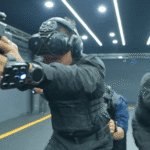
VR safety training does not replace hands-on practice with physical extinguishers. What it provides is a controlled environment for rehearsing the cognitive and situational components that conventional training has structural difficulty addressing — fire classification, equipment evaluation, spatial positioning, and the decision to disengage. The five lessons below identify where this gap typically sits in Indonesian workplace fire programs, and how VR-based scenarios can be used to close it.
1. Portable Fire Extinguishers Have a Limited Operating Window
A portable fire extinguisher typically holds between 3 and 9 kilograms of suppressant agent, with an effective discharge time of approximately 8 to 25 seconds. For incipient-stage fires affecting a small area, this capacity is generally sufficient. For fires that have spread beyond a few square meters, a single extinguisher is rarely enough to achieve full suppression.
This capacity constraint is often understated in conventional training. A figure such as “6 kilograms of agent” remains abstract on a poster or in a slide deck. The operational implication — that an operator has less than half a minute of discharge time to reach the fire source and apply the agent correctly — is harder to internalize without an experiential reference.
VR simulation provides that reference. Trainees experience the cylinder running empty after a specific number of seconds while the fire continues to burn, which clarifies the operational priorities: target the base of the flame, avoid wide sweeping motions, and maintain effective working distance from the source rather than spraying from too far away.
2. Each Fire Class Requires a Specific Suppression Agent
Fire classification is the area where incorrect application carries the highest consequence. Water-based extinguishers used on energized electrical equipment present an electrical shock hazard. Powder extinguishers applied to hot cooking oil can cause violent splashing and accelerate fire spread. CO2 extinguishers used in small enclosed spaces can displace oxygen below safe operating levels for the operator.
Conventional fire extinguisher training typically presents one extinguisher type — most often ABC dry chemical powder, since it is the most widely deployed in Indonesian workplaces — and one fire class. Trainees rarely have to differentiate between Class A (ordinary combustibles), Class B (flammable liquids), Class C (electrical equipment), Class D (combustible metals), and Class K (cooking media), and then select the matching agent under time pressure.
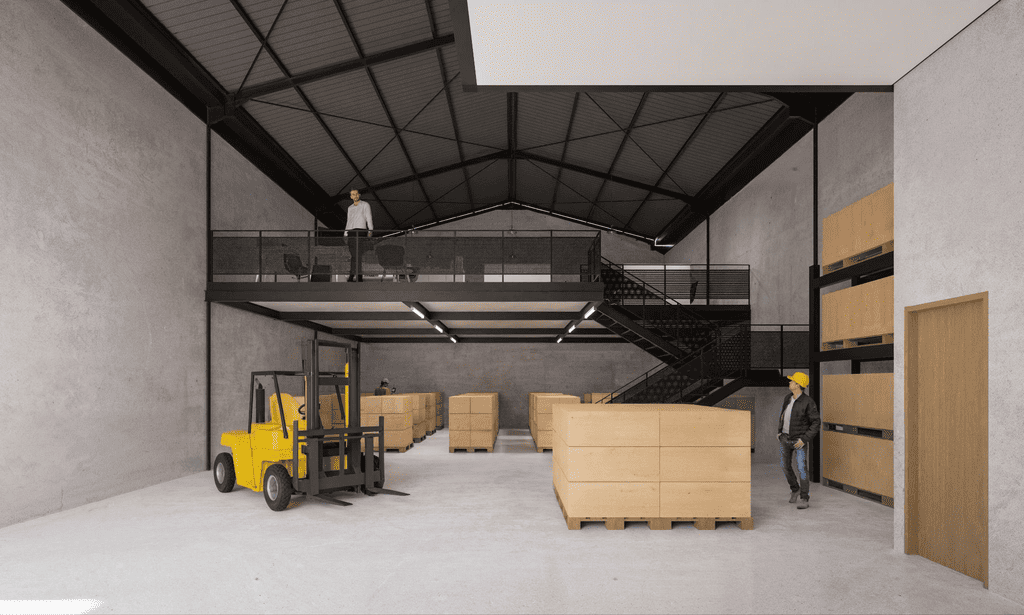
VR scenarios allow the full classification matrix to be presented within a single training cycle. Representative scenarios include an office fire involving energized cabling, a kitchen fire involving cooking oil, a warehouse fire involving a fuel spill, and an electrical panel fire. The classification-to-agent matching becomes an exercised skill rather than a poster recall.
3. Pre-Operation Inspection Is Part of Extinguisher Use
Several quick checks should be performed before pulling the pin: the pressure gauge in the green operating range, the pin seal intact, the discharge hose free of damage, and the service date current. A meaningful percentage of extinguishers mounted in Indonesian buildings are not in fully ready-to-use condition at any given time. Slow leaks reduce internal pressure over time. Service intervals lapse without facility maintenance teams detecting them.
In an actual fire response, time spent attempting to operate a non-functional extinguisher is time deducted from the available suppression window. This can be the operational difference between a contained incipient fire and one that progresses to the growth stage.
VR scenarios can include extinguishers in varied conditions — some fully operational, others depleted, expired, or visibly damaged. Trainees develop the inspection reflex of reading the pressure gauge, identifying expired service tags, and making a rapid decision between “use this one” and “find another.” This evaluation step is difficult to drill in conventional training because of constraints on the number and variety of extinguishers available on the training site.
4. Body Position and Distance Affect Outcomes
The PASS technique includes the instruction to “sweep at the base of the fire.” What standard training tends to underemphasize is the operator’s distance from the fire, orientation relative to airflow or wind direction, and body posture in relation to available evacuation routes.
Incorrect positioning can place the operator between the fire and a wall, expose them to smoke that obscures visibility, or compromise rapid retreat if the fire escalates. These consequences are difficult to demonstrate in oil tray training, where conditions remain controlled and visibility stays stable throughout the exercise.
VR simulation allows positioning consequences to be experienced without physical risk. Visibility can drop as the simulation progresses. Heat exposure can be increased through proximity. Evacuation routes can become blocked due to an unstrategic starting position. Spatial awareness in fire response is developed through these experiential elements rather than through diagrams or verbal explanation alone.
5. Knowing When to Stop and Evacuate
This is the most operationally significant lesson, and the one most rarely covered in conventional training: recognizing when a fire has exceeded the capability of a portable extinguisher, and transitioning from suppression to evacuation.
Portable fire extinguishers are designed for incipient-stage fires. When flames have reached the ceiling, spread across multiple fuel sources, or generated smoke that fills the room, the probability of effective suppression drops sharply. A meaningful portion of fire casualties involve individuals who continued attempting suppression after the operational threshold had been crossed. The underlying gap is typically not bravery but training — recognition of fire escalation cues is rarely formally taught.
Conventional training has structural difficulty addressing this lesson, because a controlled oil tray does not progress out of control. VR scenarios can present realistic escalation: spread to additional fuel sources, smoke accumulation, increasing radiant heat. Trainees develop the ability to read escalation cues and make the operational decision to retreat as part of standard response, rather than as an exception to it.
Where VR Fits Within a Broader Fire Safety Program
Hands-on training with physical extinguishers retains an essential role. The weight of the cylinder, the resistance of the squeeze handle, the actual spray distance, and the recoil at discharge are tactile components that VR does not fully reproduce. There is no operational benefit to attempting to replicate them in simulation.
What VR contributes is the cognitive and situational layer of fire response — fire class identification, equipment evaluation, spatial positioning, and disengagement decisions. These components are difficult to drill in conventional formats due to constraints on scenario variety, equipment availability, and the inability to safely escalate a controlled training fire.
Facilities with complex fire risk profiles — chemical processing plants, energy facilities, high-rise commercial buildings, hospitals — frequently combine the two approaches. Hands-on training at program initiation builds the motor foundations. Periodic VR sessions, with varied scenarios, maintain the cognitive and situational components between hands-on cycles. The combined model produces a level of operational readiness that neither approach delivers in isolation.
Closing
PASS is the foundation of fire extinguisher operation. It is not the complete picture. The five lessons outlined above represent additional layers of understanding that determine whether employees will respond appropriately to a real fire event, or default to a memorized motor sequence without sufficient situational judgment.
VR safety training is one mechanism for addressing this gap. It does not replace hands-on practice, accredited fire safety certification, or in-person instruction. It provides supplementary practice and competency documentation for the cognitive and decision-making components of fire response — which is where conventional methods are structurally limited.
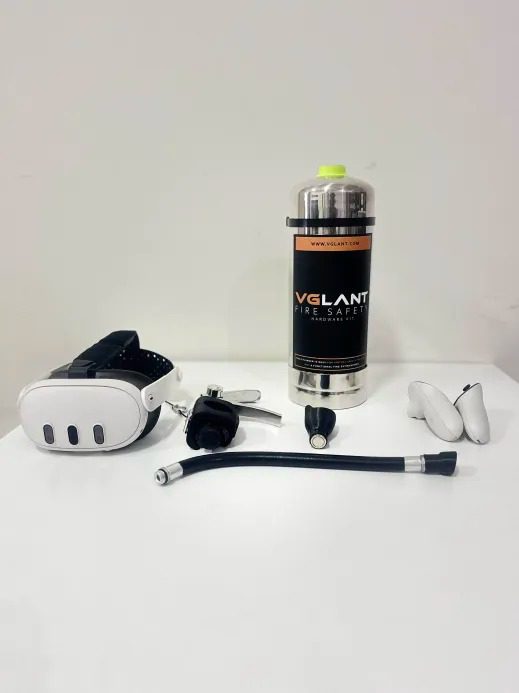
VGLANT develops VR-based safety training for Indonesian workplaces, including fire response and APAR operation modules, first aid scenarios, hazardous material handling, and confined space training. Scenarios are mapped to Indonesian K3 standards and reflect actual workplace environments — high-rise offices, factories, warehouses, and commercial areas. The platform supports Bahasa Indonesia and English, and runs on standard VR hardware. For specifications or pilot scoping, visit vglant.com.