There are two kinds of safety culture. Most organizations have one and want the other.
The reactive safety culture treats emergency preparedness as a compliance obligation. Training happens because regulations require it. Drills happen because the schedule says they should. Certificates are issued and filed. When an emergency occurs — a fire in the break room, a colleague who collapses — the organization discovers the gap between what their training records show and what their people can actually do.
The proactive safety culture treats emergency preparedness as a genuine organizational capability. Training is designed to build competence, not document attendance. Readiness is measured continuously, not assumed from certification dates. The goal is a workforce that can actually respond effectively when something goes wrong — not a workforce that has technically fulfilled its training hours.
The gap between these two cultures is significant. And VR safety training for fire and first aid is one of the most effective tools available for crossing it.
Why Indonesian Organizations Face Particular Urgency
Indonesia’s regulatory environment for workplace safety has been strengthening steadily. The Ministry of Manpower’s occupational health and safety framework, aligned with international standards, places increasing responsibility on organizations to demonstrate not just that training occurred, but that it was effective.
Beyond regulation, the practical stakes are high. Indonesian workplaces span a wide range of fire risk profiles — from commercial offices to manufacturing facilities to hospitality venues — and the gap between theoretical fire safety knowledge and practical fire response competence is consistent across all of them. The same is true for first aid: Indonesia’s ratio of trained first responders to general population is low, and the gap between training completion and genuine competence is wide.
VGLANT’s platform was designed for exactly this context. It’s built for Indonesian organizations, informed by Indonesian workplace conditions, and structured to deliver training that actually closes the competence gap rather than just satisfying a compliance requirement.
The Data Problem at the Center of Reactive Safety Culture
One of the defining characteristics of reactive safety culture is the absence of meaningful data.
Organizations in reactive mode know when their staff completed training. They have attendance records, assessment scores, certification dates. What they typically don’t have is any real insight into whether their people are actually prepared — which specific skills are solid, which are weak, how individual readiness has trended over time, and where the gaps are most critical.
This absence of data makes proactive intervention essentially impossible. Safety managers can’t target remediation toward specific weaknesses they can’t see. They can’t identify individuals whose readiness is degrading between certification cycles. They can’t demonstrate to leadership — or to regulators — that their training program is producing measurable improvement in organizational capability.
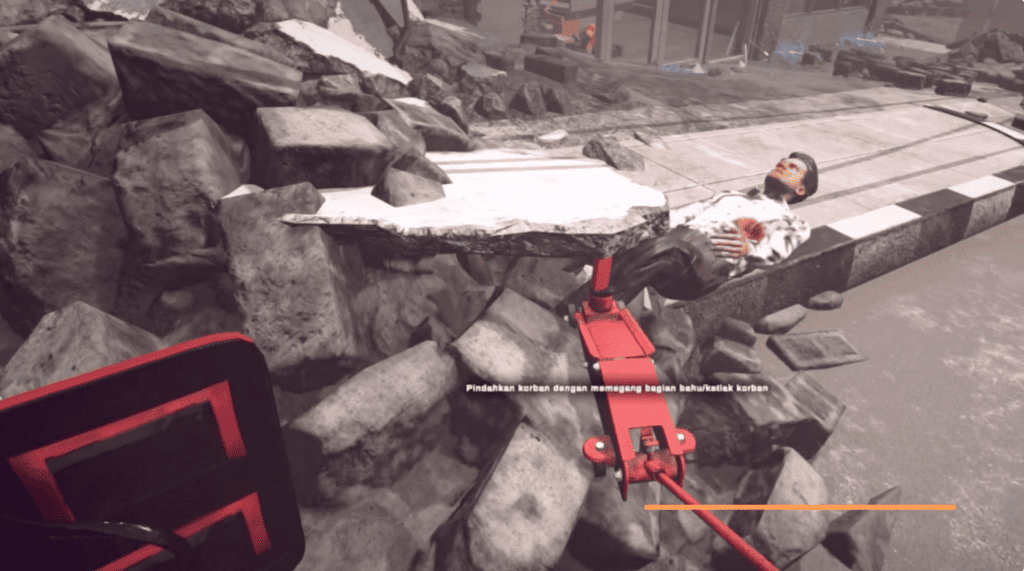
VGLANT’s data infrastructure directly addresses this. Every VR safety training session — whether for fire response, first aid, or both — generates granular performance metrics that are captured, stored, and visualized in an admin dashboard. Task duration, decision accuracy, procedure sequence, reaction time, improvement trends across sessions — all of it visible, in real time, to safety managers who need to understand where their organization’s readiness actually stands.
This data capability is what makes proactive safety culture operationally possible. You can’t manage what you can’t measure. VGLANT makes readiness measurable.
How VGLANT’s Implementation Builds Culture, Not Just Competence
The mechanics of VGLANT’s VR safety training for fire and first aid are important — the zero-risk simulation, the muscle memory development, the performance tracking. But the way the platform is implemented matters as much as the platform itself for building genuine safety culture.
The process starts with a needs assessment: a consultation with VGLANT’s specialists that identifies specific training gaps in your organization’s current readiness profile. This isn’t a sales exercise. It’s the diagnostic step that determines what your training program actually needs to address.
From there, your existing safety documentation — SOPs, emergency procedures, compliance requirements — is converted into immersive VR scenarios. This conversion is important because it ensures that what trainees practice in the simulation is aligned with what your organization’s actual procedures require. Training and procedure are consistent, which is not always the case with off-the-shelf training content.
Deployment gives safety managers real-time visibility into training sessions as they run. Performance data begins accumulating immediately. After the first round of sessions, the admin dashboard already shows where competence is strong and where it’s not — information that informs the next round of training before the first round has even been formally assessed.
The final stage — analysis and scaling — is where the proactive culture loop closes. Data from completed sessions drives targeted remediation. Specific scenario types are repeated for individuals or teams where performance data shows gaps. Training frequency is calibrated against the readiness data rather than against an arbitrary annual schedule. And the program expands based on demonstrated effectiveness, not on vendor promises.
What Changes When Safety Culture Changes
Organizations that move from reactive to proactive safety culture — supported by tools like VGLANT’s VR safety training for fire and first aid — report changes that go beyond metrics.
Staff relationship to safety training changes. When training is genuinely immersive, physically engaging, and visibly connected to real capability rather than compliance documentation, staff take it seriously. They remember it. They talk about it. The experience of having been inside a simulated fire emergency — having had to make the decisions, having felt the urgency — changes how people think about fire safety in a way that a mandatory online module simply does not.
Management visibility into readiness changes. When safety managers have real performance data rather than attendance records, they engage with safety training differently. The conversation with leadership shifts from “we are compliant” to “here is what our readiness looks like, here is where we’ve improved, and here is what we’re working on.”
And when an actual emergency occurs — because eventually it will — the outcome changes. The difference between a workforce that has practiced emergency response under simulated stress and a workforce that has sat through a compliance module is the difference between effective response and hesitation, between lives protected and lives at risk.
The Assessment Is the Starting Point
VGLANT offers organizations a two-minute readiness assessment — a structured questionnaire that evaluates current training approaches, identifies gaps, and provides immediate, personalized recommendations. It’s the fastest way to understand where your organization’s safety culture currently stands and what it would take to move it toward genuine proactive readiness.
The proactive safety culture isn’t built in a single training session. It’s built through consistent, data-driven, measurable practice — the kind that VGLANT’s platform is specifically designed to support.
The organizations that build it are better prepared when emergencies happen. Their people act rather than freeze. Their safety investments produce genuine capability rather than compliant paperwork.
That’s the difference worth building toward.
Start your organization’s journey toward proactive safety culture with VGLANT’s VR training platform at https://vglant.com/